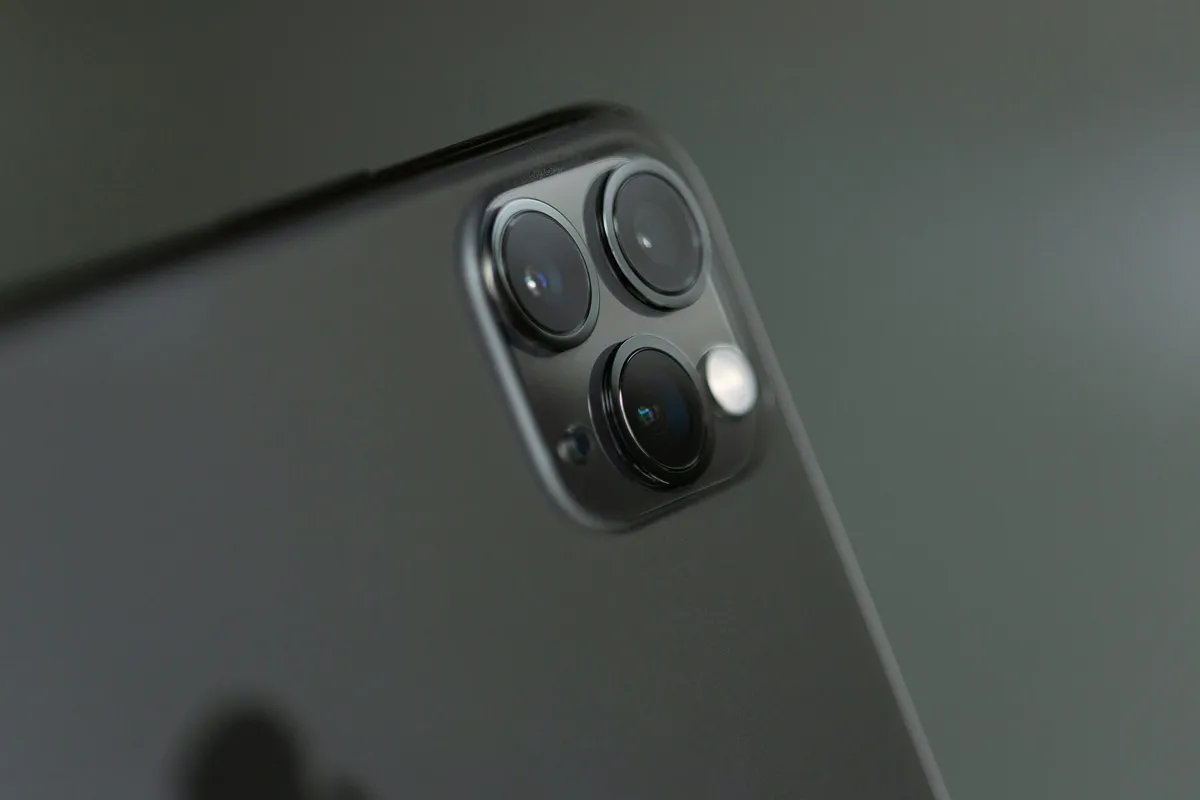
Your New Phone's Camera Is Worse Than Last Year's — and That's Not an Accident
Something strange is happening in the smartphone industry. Three of the world's largest phone manufacturers — Samsung, OnePlus, and Google — have all released flagship or near-flagship phones in early 2026 with cameras that are objectively worse than their predecessors. Not different. Not "reimagined." Worse.
We spent weeks tracing the spec sheets, digging through component databases, and following the semiconductor supply chain to understand why. What we found isn't a story about one bad product decision. It's a story about how the AI boom is quietly cannibalizing the consumer electronics you depend on every day.
The Evidence: Three Downgrades in Three Months
Samsung Galaxy S26 Ultra: The Telephoto That Vanished
For five consecutive generations — from the Galaxy S22 through the S26 — Samsung has shipped the same 50-megapixel ISOCELL GN2 main sensor. Five years. Same sensor. In an industry that traditionally used camera upgrades as the primary selling point for annual refreshes, this alone would be notable.
But the S26 Ultra goes further. Samsung quietly dropped the dedicated 3x telephoto lens that had been a defining feature of the Ultra line. The previous generation used Sony's IMX754, a proven 12-megapixel sensor with a 1/3.52-inch optical format. The S26 Ultra replaces it with Samsung's own ISOCELL S5K3LD — a smaller 1/3.94-inch sensor that produces measurably less light-gathering capability.
The numbers tell the story: a sensor area reduction of roughly 20 percent means each pixel captures less light. In practical terms, expect more noise in low-light telephoto shots, reduced dynamic range at distance, and softer detail in the mid-zoom range that millions of users rely on for everyday photography.
Samsung's official justification? "Rising semiconductor and memory prices" required "component optimization across the product line." In plain English: they needed cheaper parts because the expensive ones went somewhere else.
OnePlus 15: The Quiet Shrink
OnePlus built its reputation on flagship specs at competitive prices. The OnePlus 13, released in late 2024, carried a Sony LYT-808 main sensor with a 1/1.43-inch optical format, an f/1.6 aperture, and 1.12-micron pixels. It was one of the best camera systems in its price bracket.
The OnePlus 15, its 2025 successor, ships with a smaller sensor. The optical format shrinks to 1/1.56 inches — a 16 percent reduction in sensor area. The aperture narrows from f/1.6 to f/1.8, letting in roughly 25 percent less light. Pixel size drops from 1.12 microns to 1.0 microns.
Each of these changes individually might be dismissed as a minor trade-off. Together, they represent a substantial regression in raw imaging capability. A smaller sensor with smaller pixels and a narrower aperture will produce noisier images in challenging lighting conditions — exactly the scenarios where a good phone camera earns its keep.
OnePlus also quietly dropped its Hasselblad branding and color science partnership that had been a marquee feature since the OnePlus 9 series. No announcement, no explanation — just gone from the spec sheet.
Google Pixel 9a: The Budget That Got Budgeted
Google's A-series Pixels have historically punched above their weight. The Pixel 8a shipped with a 64-megapixel main sensor on a 1/1.73-inch format — impressive hardware for a mid-range device, backed by Google's industry-leading computational photography.
The Pixel 9a downgrades to a 48-megapixel sensor on a significantly smaller 1/2-inch format. That's a 33 percent reduction in sensor area. Even Google's exceptional image processing pipeline can't fully compensate for that much less light hitting the silicon.
Google's stated reason was that the smaller sensor "enabled a new industrial design." The phone is marginally thinner. Whether consumers would choose a slightly slimmer phone over a substantially better camera is a question Google apparently decided not to ask.
Following the Silicon
Three different companies. Three different product lines. Three different price brackets. All making the same decision at the same time: ship worse camera hardware than last year.
Coincidence? Follow the money — or more precisely, follow the memory chips.
According to TrendForce, DRAM contract prices surged 90 to 95 percent quarter-over-quarter in Q1 2026. NAND flash prices climbed 55 to 60 percent in the same period. These aren't normal market fluctuations. They represent the most severe memory price shock since the cryptocurrency mining boom of 2017-2018.
The cause is well-documented but poorly understood by the general public. AI training clusters — the massive server farms that companies like OpenAI, Google, Meta, and Microsoft are building to train and run large language models — have an insatiable appetite for high-bandwidth memory (HBM). Every HBM chip that goes into an AI server is a chip that doesn't go into your phone, laptop, or tablet.
Companies like Micron and SK Hynix have publicly stated they are reallocating wafer capacity toward HBM production, where margins are dramatically higher. Samsung's own semiconductor division — the same Samsung that makes Galaxy phones — has been aggressively shifting DRAM production toward AI-grade memory.
The International Data Corporation (IDC) has characterized this as "a potentially permanent, strategic reallocation of the world's silicon wafer capacity." Not a temporary supply crunch. A structural shift in who gets the good chips.
The Squeeze Effect
When memory prices spike 90 percent in a single quarter, phone manufacturers face an impossible choice. The bill of materials for a flagship smartphone has a hard ceiling — cross it, and the retail price jumps into territory where demand drops off a cliff. IDC projects 140 million fewer smartphones will be sold in 2026 compared to 2025 — a decline from roughly 1.26 billion to 1.12 billion units.
So manufacturers absorb the cost of more expensive memory by cutting costs elsewhere. And camera sensors, which have become increasingly commoditized, are an obvious target. A phone manufacturer can save $8 to $15 per unit by downgrading a camera sensor — and most consumers won't notice until they try to take a photo in a dim restaurant.
This is textbook shrinkflation applied to electronics. The box looks the same. The model number increments by one. The marketing materials emphasize software features and AI capabilities. But the hardware you're holding is objectively less capable than the phone it replaced.
The RAM Crisis Within the Crisis
Camera sensors aren't the only casualty. The memory squeeze is hitting phones directly through RAM cuts.
Industry data shows that 16GB RAM configurations — which had been proliferating across flagship Android phones throughout 2024 and early 2025 — are rapidly disappearing from 2026 models. Phones shipping with 12GB have dropped by approximately 40 percent year-over-year. On the low end, some manufacturers are reverting to 4GB configurations that the industry had largely left behind.
Less RAM means more aggressive app killing in the background, slower multitasking, and reduced longevity as operating systems and apps grow more demanding over time. For a device that consumers increasingly keep for three to four years, RAM cuts in 2026 will compound into noticeable performance degradation by 2028.
Who Benefits?
It's worth asking: who actually wins here?
AI companies get the memory they need to train larger models. Semiconductor manufacturers enjoy higher margins on HBM than on consumer-grade DRAM. Phone manufacturers get to maintain their profit margins by quietly downgrading components.
Consumers get a phone that takes worse photos, runs fewer apps simultaneously, and costs about the same — or more — than last year's model.
The information asymmetry is the real problem. When your cereal box shrinks from 18 ounces to 15.4 ounces, you can at least read the label. When your phone's camera sensor shrinks from 1/1.43 inches to 1/1.56 inches, that information is buried in a spec sheet that most buyers never see. And manufacturers are certainly not highlighting these regressions in their launch events.
What to Look For
If you're buying a phone in 2026, here's how to spot the downgrades:
- Sensor size — Compare the optical format (measured in inches) between the new model and its predecessor. Smaller is worse. Look for fractions: 1/1.3" is much better than 1/2".
- Pixel size — Measured in microns (μm). Larger pixels capture more light. If the new model dropped from 1.12μm to 1.0μm, that's a downgrade regardless of megapixel count.
- Aperture — Lower f-numbers mean more light. f/1.6 lets in more light than f/1.8. Check both main and telephoto lenses.
- RAM — Don't assume the new model has more RAM than its predecessor. Check the fine print for each storage variant.
- Sensor brand and model — A switch from a Sony IMX sensor to a cheaper Samsung ISOCELL or OmniVision alternative often signals cost-cutting.
- Missing features — Branding partnerships (like OnePlus/Hasselblad), dedicated telephoto lenses, and autofocus on ultrawide cameras are common cut targets.
The Bigger Picture
The AI boom is producing genuine technological breakthroughs. Large language models, image generation, and scientific computing are advancing at a remarkable pace. But every technological revolution has costs that get distributed unevenly.
Right now, the cost of the AI revolution is being paid by hundreds of millions of consumers who will buy a phone this year without knowing that the camera, the memory, and the overall capability of that phone has been deliberately reduced so that the silicon could go somewhere more profitable.
This is not a conspiracy. It's a market responding rationally to incentives. But markets responding rationally to incentives is exactly how enshittification works — and exactly why documenting it matters. When the incremental downgrades happen slowly enough, across enough product categories, consumers lose the ability to notice. The only defense is systematic, version-over-version tracking of what's actually inside the products we buy.
Your phone's camera didn't get worse by accident. It got worse because someone decided the silicon was worth more elsewhere. The least we can do is make sure that decision doesn't go unnoticed.
Loading comments...