Why Speed Queen Won: The Case for the Washing Machine That Does Nothing Interesting
I want to tell you about the most boring washing machine you can buy. It has no Wi-Fi. No companion app. No AI cycle optimization. No ThinQ integration, no SmartThings hub pairing, no firmware updates delivered overnight. You cannot ask it anything. You cannot check its status from your phone. It does not know what it is washing and does not care. You put clothes in, you turn a dial, and it cleans them.
Speed Queen just won two URDB Integrity Awards: Best Appliance Integrity for the TR7 washer, and the inaugural Lifetime Integrity Award for the brand as a whole. That second one is not handed out to products. It's handed out to companies that have, over a long enough time horizon, simply refused to do what everyone else in their industry did. Speed Queen is the only major appliance brand in the URDB database with zero documented enshittification events. Not one feature removal. Not one subscription introduced. Not one material substitution we could document. Not one firmware push that made the machine worse.
That record didn't happen by accident. It happened because Speed Queen made a series of decisions that, from a conventional appliance-industry perspective, look like strategic failures. I think they're the opposite.
What Speed Queen Actually Makes
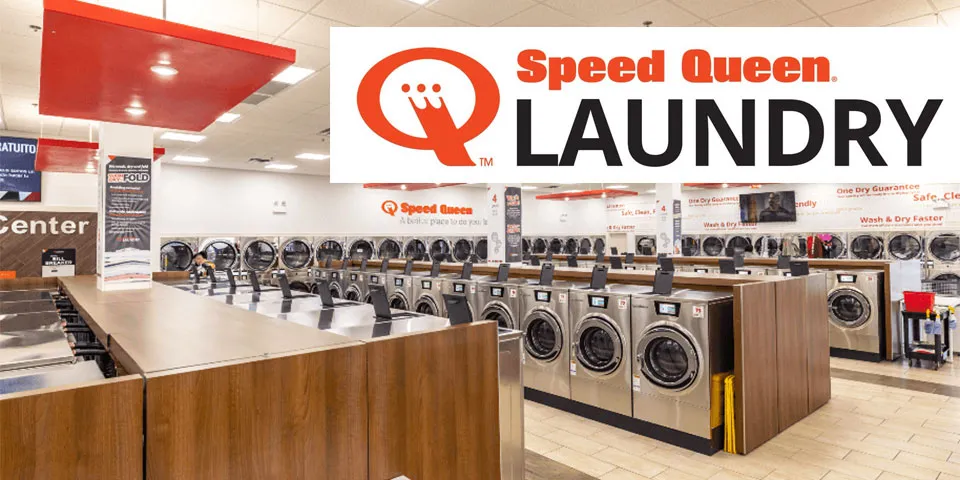
Speed Queen is a brand of Alliance Laundry Systems, based in Ripon, Wisconsin. They have been making commercial laundry equipment since 1908 and residential machines since the 1960s. The commercial operation is the spine of the company: Speed Queen makes the washers you find in laundromats, hospitals, hotels, and universities — machines built to run multiple cycles per day, every day, for decades. The residential line uses the same commercial-grade components.
That heritage matters. A laundromat owner buying Speed Queen machines is making a capital investment. If a machine breaks down, it's not an inconvenience — it's lost revenue and potentially a lost customer. The machines have to work reliably, be repairable by a local technician with standard parts, and last long enough to justify the purchase price. Speed Queen built its business on those requirements. When they applied the same philosophy to home washers, they did not soften it.
The TR7 — our Best Appliance winner — uses a mechanical agitator. Not an impeller, not a high-efficiency spray system, not a "wash motion algorithm." A mechanical agitator: a spindle in the center of the tub with fins that physically move clothes through the water. The design is old. It uses more water than modern HE machines. It is harder on certain delicate fabrics. Speed Queen knows this, and they sell it anyway, because a mechanical agitator is robust, fixable, and lasts a very long time. The choice is not ignorance. It's a value judgment about what "better" means.
The 25-Year Number
Speed Queen publishes a 25-year residential lifespan figure for their machines. Not as marketing — as an engineering specification. Independent appliance repair technicians back it up. The average lifespan of a major-brand front-load washer is around 8-10 years before the repair costs outweigh replacement. Speed Queen machines routinely run 20+ years with basic maintenance. Some run 30.
The economics of this are worth sitting with. A Speed Queen TR7 costs significantly more upfront than a comparable Samsung or LG machine. Over a 25-year period, you're potentially buying one washer instead of two or three. At the end of that period, your Speed Queen is still running. The Samsung or LG machines you replaced it with have each had at least one repair that cost nearly as much as a new budget machine, plus one or two firmware updates that changed behavior you'd gotten used to, plus at least one cloud-connected feature that quietly stopped working when the manufacturer decided to move on.
I'm not inventing this. This is the URDB database. This is what documented enshittification looks like in the appliance category over a multi-year horizon.
The Appliance Industry, Everyone Else
In September 2025, Samsung pushed a firmware update to its Family Hub refrigerators — $2,000 to $3,000 machines — that enabled advertising on the Cover Screen displays. No opt-out exists that doesn't require disconnecting the refrigerator from Wi-Fi, which disables all smart features. Samsung customers paid $2,500 for a refrigerator and got a billboard delivered via the internet to their kitchen.
This is not a one-off. It is the logical endpoint of a decade-long trend. LG's ThinQ platform. Whirlpool's connected appliances. GE Appliances' integration with voice assistants and service subscriptions. Every major appliance manufacturer has spent years adding internet connectivity to washing machines, dryers, refrigerators, and dishwashers. Some of this connectivity is genuinely useful. A lot of it is a monetization vector: a way to collect usage data, sell extended warranties through the app, push advertising, introduce subscription features, and maintain a relationship with the customer after the sale that extends the company's revenue without requiring them to sell a new machine.
Speed Queen went the other direction. No Wi-Fi. No app. No subscription model for any feature, ever. Their machines do not need to connect to anything. They do not send usage data anywhere. They will not receive a firmware update one morning that changes how they behave. They will not stop working when a cloud server is decommissioned. You own the machine. Fully. Without condition.
Zero Documented Events
The URDB Lifetime Integrity Award has one specific criterion: zero documented enshittification events in the database, with a product history long enough for that to be meaningful. Speed Queen is the only major appliance brand that qualifies.
I want to be precise about what "zero documented events" means and doesn't mean. It means that in our sourced database of change events, we have not found a documented instance of Speed Queen reducing warranty coverage, removing a feature, substituting cheaper materials, introducing a subscription, or degrading their machines' capabilities via a software update. It does not mean Speed Queen is perfect. Their machines have had quality control issues at various points in their history, and there is a legitimate criticism that the shift toward more HE-oriented designs in some of their newer lines represents a concession to efficiency regulations that older Speed Queen loyalists dislike. We document what we can source.
What we can source, for Speed Queen, is a clean record. That's genuinely rare. It's worth saying out loud.
Should You Buy One?
Honest answer: maybe. Speed Queen machines have real tradeoffs. They are expensive upfront. The TR7 uses substantially more water than HE front-loaders. If you have hard water, a plumber and specific detergent requirements come with the territory. The spin speed on some models is lower than competing machines, meaning clothes come out wetter and take longer in the dryer. Some people find them too loud. If you have a household that runs five loads a week with very specific fabric care needs, a Speed Queen might not be the right tool.
But if you have a family that runs a lot of laundry, lives somewhere with a good independent appliance repair shop, plans to stay in a house for more than a decade, and is tired of replacing appliances that should have lasted longer, the math starts to make sense. You pay more now. You repair once or twice over 25 years instead of replacing twice. You never get an unwanted firmware update. You never pay a subscription to use a feature you already paid for. The machine does not know what Wi-Fi is.
This is what the URDB Integrity Awards are trying to surface: the products where the boring choice is actually the right choice, and where "fewer features" is a feature. Speed Queen is the clearest case we've found. They've been making the same basic machine for decades, improving it in engineering ways rather than marketing ways, and refusing almost every trend their competitors chased.
They won because they didn't follow anyone else. In 2025, that's the hardest thing a company can do.
The Speed Queen TR7 Washer is in the URDB database at urdb.io/products/speed-queen-tr7. The full 2025 Integrity Awards are at urdb.io/awards/2025.
Loading comments...