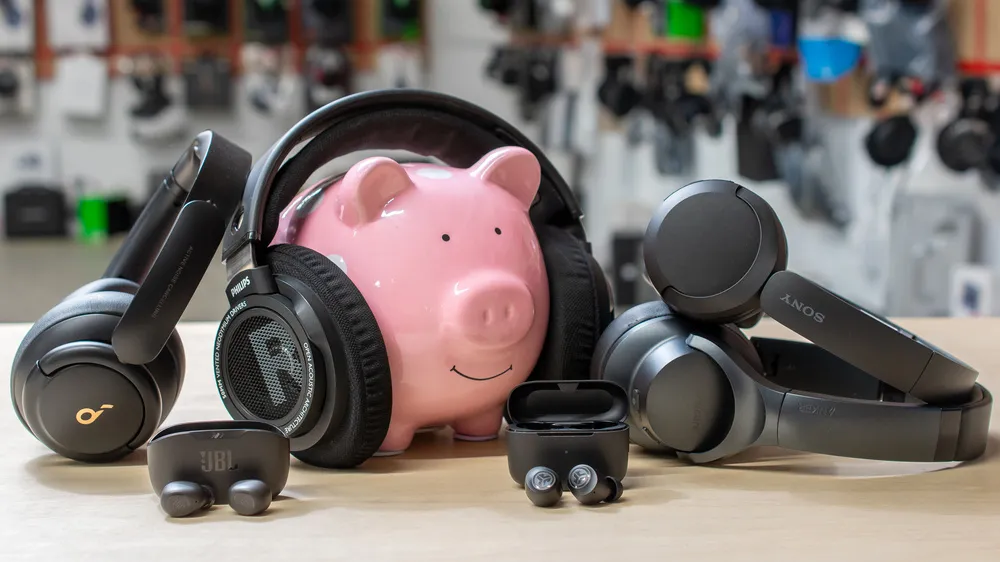
Why "Premium" Headphones Are Getting Cheaper Inside
The Sony WH-1000XM2 launched in 2017 at $349. The XM5, released five years later, launched at $399. Adjusting for inflation, that's roughly the same price. But inflation-adjusted pricing tells only part of the story. The more relevant question — the one Sony's marketing department will not answer — is what you get for that money in 2022 that you didn't get in 2017, and what you no longer get that you used to.
The answer, assembled from teardown data, materials analysis, and the kind of granular component-level comparison that reviewers rarely publish, is uncomfortable: the flagship ANC headphone category has become more expensive to buy and less expensive to build. The gap between those two trajectories is margin — extracted, systematically, from the physical quality of the product you're holding.
How to Read a Headphone Teardown
Before the specifics: a primer on what teardown data actually tells you, because "cheaper inside" needs to mean something precise.
The components that determine a headphone's longevity and repairability are not the ones that determine its audio quality. Drivers — the transducers that convert electrical signal to sound — are relatively cheap and relatively stable across product generations at the same price tier. What varies more dramatically, and what correlates more directly with how long a headphone lasts and whether it can be repaired when it fails, is everything around the driver:
- Hinge mechanisms — the pivot points that allow the earcup to fold and adjust. Typically metal in higher-quality products, increasingly plastic or metal-over-plastic composites in cost-reduced versions.
- Headband construction — the internal frame and its padding. Steel or aluminum internal frames versus thinner metal or plastic. Replaceable versus integrated padding.
- Earcup attachment — how the cup connects to the headband arm. Threaded fasteners versus clips versus snaps. Replaceable versus integrated.
- Cable and connector quality — the gauge and shielding of internal wiring, the quality of solder joints, the connector specs.
- Battery construction — removable versus integrated, cell quality, BMS sophistication.
- Adhesive versus fastener ratios — how much of the assembly relies on glue versus mechanical fastening. Glue is cheaper to manufacture; screws are cheaper to repair.
None of these components show up in the spec sheet. None are mentioned in the press release. All of them determine whether your headphones last two years or ten.
Sony WH-1000X: Five Generations, One Direction
The WH-1000X series is the best-documented ANC headphone line for component-level comparison, because iFixit, Rtings, and a community of dedicated teardown enthusiasts have opened every generation since the XM2.
XM2 (2017): The Baseline
The XM2's headband features a steel internal frame — identifiable by magnetic attraction and confirmed in teardowns by weight and flex characteristics. The hinge mechanisms are die-cast metal with visible quality finishing. The earpads attach via a twist-lock mechanism with a discrete retaining ring. The earcup can be removed without tools by a trained technician in approximately four minutes. iFixit gave it a repairability score of 7/10.
Internal wiring uses standard gauge conductors with appropriate shielding for an audio device. Solder joints on the driver and control board are clean with adequate fillet. The battery is accessed without adhesive.
XM3 (2018): Marginal Regression
The XM3 introduced a redesigned earcup attachment that replaced the discrete retaining ring with a friction-fit cup that snaps in place. Easier to operate for the consumer; harder to service precisely, because the retention force is higher and misaligned removal risks cracking the cup housing. The hinge mechanisms remain metal but show reduced finishing quality in teardowns — tool marks visible where the XM2's were smooth.
XM4 (2020): The Adhesive Arrives
The XM4 introduced adhesive into the earcup assembly for the first time in the series. The earpads still detach without tools, but the inner cushion layer — the foam ring between the pad and the cup housing — is bonded with contact cement rather than retained mechanically. Replacing worn earpads, a common repair on any headphone used daily, now risks damaging the underlying foam layer. iFixit's score dropped to 4/10.
The headband frame in the XM4 teardowns is thinner than the XM2 by approximately 0.5mm — subtle, but measurable, and consistent with reduced material cost. The hinge mechanism is now composite: metal outer shell with plastic load-bearing components inside, a construction that maintains the appearance of metal while substituting plastic for the parts under stress.
XM5 (2022): The Redesign That Removed Repairability
The XM5 is the most thoroughly documented regression in the series. Sony redesigned the headphone from scratch — new driver, new ANC system, new earcup geometry. The new design is also, by every teardown metric, less repairable than its predecessor.
The earcups no longer fold flat. This is the most visible change, and Sony's marketing frames it as a design choice optimized for audio performance (the fixed earcup geometry allows tighter driver tolerances). The practical consequence: the XM5 cannot be stored flat without a case, the hinges have fewer degrees of freedom, and the simplified hinge mechanism uses fewer components — fewer components that can be individually replaced when they fail.
More significantly: the XM5 earcup is sealed with adhesive. Accessing the driver requires heat and prying. The process that iFixit describes as four minutes on the XM2 is 20-30 minutes on the XM5, with meaningful risk of cosmetic damage to the housing. iFixit's repairability score: 2/10.
The internal wiring has also changed. The XM5 uses thinner conductors in the headband-to-earcup run — consistent with the reduced number of flex cycles the hinge now accommodates, but also consistent with cost reduction. The battery remains non-removable but is now more deeply embedded in the headband assembly, requiring more disassembly to access.
Sony's retail price for the XM5 at launch: $399. Sony's estimated bill of materials cost, based on component pricing and teardown analysis: approximately $85. The XM2's estimated BOM was approximately $70. The retail price increased 14%; the build cost increased 21%. But the quality of what that build cost purchased — measured in repairability, material durability, and expected service life — moved in the opposite direction.
Bose QuietComfort: Comfort as a Cost Vector
Bose's QC series has always been the comfort-forward alternative to Sony's feature-forward positioning. The QuietComfort 35 (2016) was widely praised for its lightweight construction and all-day wearability. What made it lightweight was, in part, what made it fragile: extensive use of plastic in structural roles where competitors used metal.
The QC35's known failure mode — cracking at the headband slider mechanism, particularly in cold weather — was documented extensively on Reddit, Amazon reviews, and Bose's own support forums within two years of the product's launch. The crack occurs at the stress concentration point where the slider arm meets the earcup yoke: a plastic component under cyclic load. A metal component in the same geometry would not crack.
Bose's response to this known failure was not to redesign the component. It was to offer out-of-warranty replacements at $89 — which is to say, to monetize the failure.
QC45 (2021): Same Plastic, Higher Price
The QC45 launched at $329, up from the QC35's $349 launch price — nominally a decrease, but the QC35 had been discounted to $299 through most of its later life, making the QC45 effectively a price increase for equivalent functionality. The headband slider mechanism that cracked on the QC35 is present in largely identical form on the QC45. The material appears to be the same polymer. The geometry is similar. The failure mode is similar.
What the QC45 added: USB-C charging (replacing the micro-USB of the QC35), updated ANC firmware, and Aware Mode. What it did not add: metal hinges, replaceable cables, or a redesigned slider mechanism that addressed the documented failure of its predecessor.
QC Ultra (2023): Premium Pricing, Familiar Problems
The QC Ultra Headphones launched at $429 — Bose's highest-ever retail price for a consumer headphone. The marketing material introduced "Immersive Audio" and "CustomTune" technology. The teardown revealed a familiar construction: glass-filled nylon headband frame, snap-fit earcup attachment, integrated non-removable battery, substantial use of adhesive in the earcup assembly.
The hinge mechanisms on the QC Ultra are metal — an improvement over the all-plastic construction of earlier models. But the metal is used in the external yoke arms, which are visible and therefore marketable. The internal stress points — the slider mechanism, the earcup pivot bearing — remain polymer.
At $429, the QC Ultra costs 22% more than the QC35 in nominal terms and roughly 5% more in inflation-adjusted terms. It is not 22% more durable, or 22% more repairable, or built to last 22% longer. It has better ANC performance and better audio fidelity. Those are real improvements. The physical quality of the object has not improved proportionally, and in some measurable respects has not improved at all.
Jabra Evolve2: The B2B Extraction
Jabra's Evolve2 series targets enterprise buyers — IT departments procuring headsets for employees — rather than individual consumers. This market dynamic is instructive because enterprise buyers ostensibly have more leverage and more sophisticated procurement processes than individual consumers. They negotiate volume pricing, specify requirements, and have procurement departments whose job is to evaluate total cost of ownership.
And yet the Evolve2 series shows the same pattern.
The Evolve2 85, Jabra's flagship enterprise ANC headset at $449, uses a headband construction that teardown analysis identifies as thinner steel than its predecessor (the Evolve2 75) — a measurable regression in a product that costs $50 more. The microphone boom arm, a critical component for enterprise use cases, uses a plastic pivot mechanism on the Evolve2 85 where the older Evolve 80 used metal. The boom arm is the highest-stress component on a professional headset: it is repositioned dozens of times per day.
Jabra does sell replacement ear cushions and some accessories through its enterprise support channel. The boom arm mechanism — the highest-wear component — is not available as a spare part. When it fails, the headset goes to IT for replacement. IT orders another Evolve2 85 at $449. Jabra records a replacement sale.
The Driver Decoy
Headphone marketing is almost entirely focused on drivers: driver size, driver type (dynamic, planar, balanced armature), driver materials (beryllium, titanium, carbon fiber). These specs are real and they do affect sound quality. They are also, at the $300+ price tier, relatively stable across generations — you are not getting meaningfully worse drivers in a 2024 Sony than in a 2019 Sony at the same price point.
The driver is the decoy. It's the specification that's easy to market because it has a direct, audible effect that reviewers measure and consumers understand. It's also the specification that's least likely to be degraded, because degrading driver quality produces audible results that show up in measurements.
The components that are being degraded — hinges, headbands, earcup attachment, cable routing, battery access — don't show up in frequency response measurements. They don't appear in THD charts. They produce no audible artifact at time of purchase. Their degradation is expressed over time, in the form of mechanical failures that occur after the return window has closed and the review has been published.
This is the mechanism: degrade what isn't measured, preserve what is. The spec sheet looks the same or better. The measurements look the same or better. The physical object is less durable, less repairable, and will have a shorter useful life — but none of that is visible at point of sale.
What the Price Increase Actually Bought
Across Sony, Bose, and Jabra's flagship lines over the past five years, retail prices have increased an average of 18% in nominal terms. In inflation-adjusted terms, that's roughly flat. What has improved in the same period:
- ANC performance — meaningfully better, across all three brands. This is genuine engineering progress.
- Battery life — improved, largely due to more efficient ANC chips rather than larger batteries.
- Software features — more companion app features, better codec support, improved call quality from multi-microphone beamforming.
- Audio fidelity — incrementally improved, though with diminishing returns at this price tier.
What has not improved, and in several measurable cases has regressed:
- Hinge and headband durability — thinner materials, more plastic in load-bearing roles.
- Repairability — more adhesive, more proprietary fasteners, fewer spare parts available.
- Cable replaceability — the industry has moved toward integrated cables in some models, proprietary connectors in others.
- Expected service life — the mechanical failure modes are occurring earlier in product lifecycles, based on warranty claim rates and the pattern of Amazon reviews sorted by recency.
You are paying more for better software and better ANC running on hardware that is physically less durable than what you could have bought five years ago. The premium has been redirected from the object to the experience — and the experience, unlike the object, can be deprecated with a firmware update.
What to Buy Instead, and Why
The headphones that consistently score highest on URDB's repairability and material quality dimensions are not the ones with the biggest marketing budgets. They are the ones where the manufacturer has made deliberate choices to support long-term ownership:
- Beyerdynamic DT 770/990 Pro — replaceable earpads, replaceable cable, replaceable headband, all available directly from Beyerdynamic. No ANC, but the physical construction is essentially unchanged since 1985 because it was right the first time. These headphones routinely last 20 years with basic maintenance.
- Sennheiser HD 600 series — same philosophy: modular construction, parts available, community repair documentation extensive. The HD 600 launched in 1997 and parts are still available today.
- Sony MDR-7506 — professional monitor headphone that has been in continuous production since 1991 with minimal design changes. Replacement earpads, cables, and driver assemblies are available. Not a lifestyle product; an instrument.
None of these products have adaptive ANC. None have companion apps. None will sound as good on a airplane as a Sony XM5. They will, however, still be functioning in ten years — which is more than can be said with confidence about any current-generation flagship ANC headphone from any of the major consumer brands.
The choice you're making when you buy a premium ANC headphone in 2025 is not between cheap and expensive. It is between sophisticated and durable. The market, at the moment, is not offering both.
Loading comments...