Death by Update: The Firmware That Made Your Product Worse
On May 7, 2024, Sonos pushed an update to its app. Overnight, the speakers people had spent years assembling — $700 soundbars, $400 Moves, entire home audio systems totaling thousands of dollars — became dramatically harder to use. Alarms vanished. Sleep timers disappeared. The ability to edit a queue, add music from a local library, or manage playlists was simply gone. Accessibility features used by customers with disabilities were stripped out.
It wasn't a hack. It wasn't a bug. Sonos had redesigned its app from scratch to prepare for new product launches, and it had shipped the new app before rebuilding the features from the old one. The update was intentional. The degradation was a business decision.
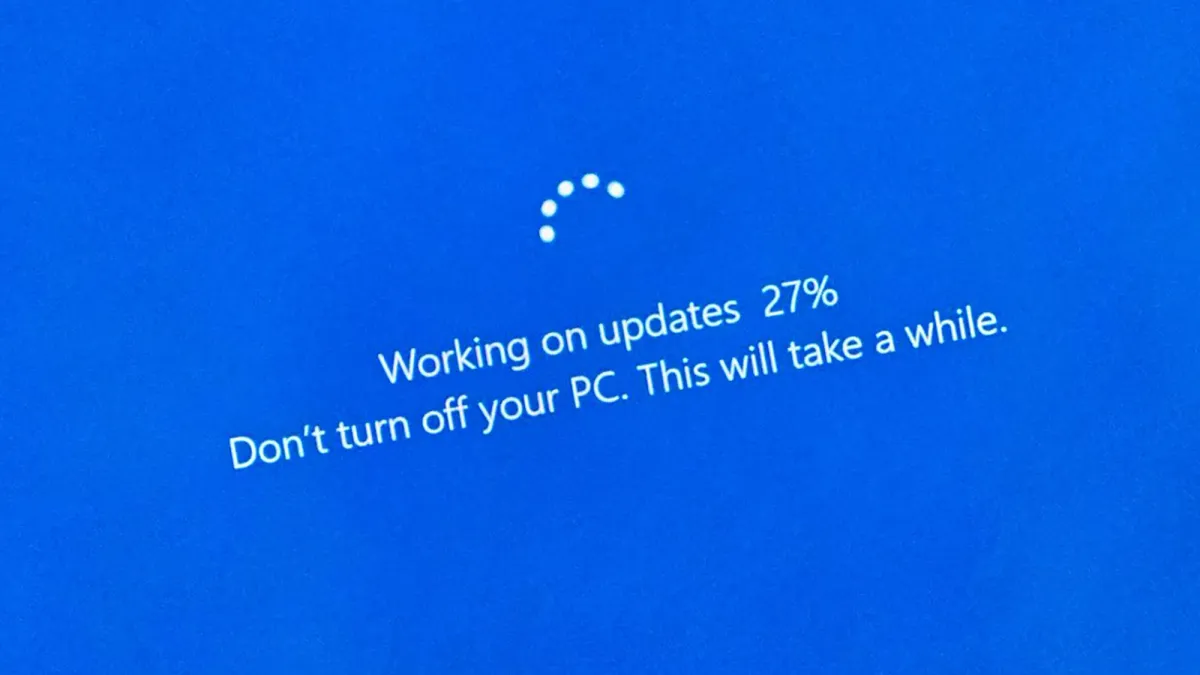
This is the cleanest example of a pattern that has proliferated across consumer electronics over the past decade: the firmware update as a mechanism for product enshittification. Unlike shrinkflation — which requires physically retooling a production line — software updates can degrade a product instantly, invisibly, and at zero marginal cost. And the terms of service you clicked through when you set up your device almost certainly gave the company the legal right to do exactly that.
Sonos: A $4 Billion Company That Shipped a Downgrade
The Sonos app disaster deserves to be studied in business schools as a case study in how not to manage a software transition.
The company had spent years building a loyal, premium customer base. Sonos speakers aren't cheap; the average Sonos household had invested over $1,000 in hardware. These weren't casual users. They were enthusiasts who had recommended the system to their friends, integrated it into home renovations, and organized their listening lives around it.
The new app removed dozens of features that the old app had offered for years — including functionality that many users considered core to daily use. The alarms feature, used by people who had replaced dedicated alarm clocks with Sonos speakers, was gone. The ability to access music stored on a local NAS drive disappeared. Queue management became rudimentary. VoiceOver support for visually impaired users was removed entirely.
CEO Patrick Spence issued a public apology and promised to restore features. But the company's reputation had been torched. Sonos delayed the launch of a new headphone product to focus on app fixes. Several senior engineers reportedly left. By the time the missing features were partially restored in late 2024, the damage was done: Sonos had demonstrated to its most loyal customers that the company could — and would — take away features they depended on at any time, for any reason, with a product update they had no ability to decline.
There is no mechanism to stay on an older version of the Sonos app and keep the old functionality. That choice was made for you.
Batterygate: Apple's Secret Throttle
In December 2017, a developer named John Poole published data on the Geekbench blog showing something alarming: iPhones running iOS 10.2.1 and 11.2 were performing dramatically slower than the same hardware running older software. The slowdown correlated precisely with battery age. Poole's conclusion: Apple was deliberately throttling CPU performance on iPhones with degraded batteries.
Apple confirmed it two days later. The company had introduced "performance management" in iOS 10.2.1 — released in January 2017 — that reduced peak CPU performance to prevent unexpected shutdowns in phones with worn batteries. Apple called this a feature. The problem was that they had done it without telling anyone. No notification. No explanation. No opt-out. Just a quiet update that made millions of people's phones run slower, leading many to conclude their hardware was obsolete and buy a new one.
The FTC and multiple state attorneys general launched investigations. Class action lawsuits were filed in dozens of countries. In March 2021, Apple agreed to pay $500 million to settle US class action claims — roughly $25 per affected device. France's data protection authority fined Apple €25 million separately. Apple has since added an explicit Battery Health screen and, in newer iOS versions, allows users to disable performance throttling themselves.
The settlement arithmetic is instructive. Apple sold approximately 722 million iPhones in the years covered by the settlement. At $25 per device, the total payout represented roughly one-tenth of one percent of Apple's revenue in a single year. The financial deterrent was approximately zero.
HP and the Cartridge Kill Switch
HP has waged a multi-year war against third-party ink — and its primary weapon has been the firmware update.
In September 2016, HP remotely pushed Firmware 01.14.2016 to millions of its printers. The update contained new DRM that recognized and rejected cartridges not purchased from HP. Printers that had been happily printing with third-party ink the night before refused to function the next morning. Users who had stocked up on compatible cartridges — sometimes spending hundreds of dollars — found their inventory instantly worthless.
HP's justification was security. Third-party cartridges, the company argued, could introduce malware or damage printheads. Security researchers pointed out that this framing was convenient cover for a straightforward revenue protection strategy. HP makes thin margins on printer hardware and substantial margins on ink; the business model requires recurring cartridge purchases to be profitable.
Class action lawsuits in both the US and UK followed. HP partially relented, releasing a firmware update that gave users the option to re-enable third-party cartridges — buried in settings, opt-in only, and requiring users to acknowledge a warning about potential "damage" from unofficial ink.
Then HP did it again. In 2022 and 2023, multiple reports surfaced of new firmware updates blocking third-party cartridges on newly enrolled printers. Each cycle follows the same pattern: firmware push, cartridges stop working, consumer outrage, partial reversal, repeat. HP's own product page for its "HP+" program states, in fine print, that enrolling in the program permanently locks the printer to HP-branded cartridges for the device's lifetime. The update enables the lock. The lock never comes off.
Sony Took Away a Feature You Were Sold
In 2007, Sony launched the PlayStation 3 with a prominently marketed feature called "OtherOS" — the ability to install a secondary operating system, most commonly Linux, alongside the PS3's gaming software. Sony advertised this in product materials and on the official PlayStation website. Some customers bought the hardware specifically because of it. The US Air Force purchased 2,200 PS3 units to build a supercomputer cluster using the OtherOS capability.
In April 2010, Sony pushed Firmware 3.21. The update removed OtherOS entirely. Users who refused the update lost access to the PlayStation Network and couldn't play new games requiring the latest firmware. The choice was: accept the update and lose OtherOS, or keep OtherOS and lose online functionality for a console explicitly designed around online play.
A class action lawsuit followed. Sony's defense was that the terms of service permitted firmware updates that changed functionality. The court agreed that Sony had the legal right to remove the feature — but allowed claims about whether Sony had adequately disclosed that it might do so when the PS3 was sold. The case eventually settled in 2016 for $55 for customers who had actually used OtherOS, and $9 for those who had purchased the PS3 expecting to but hadn't gotten around to it yet.
The OtherOS removal is now largely forgotten. It shouldn't be. It established a legal template that every subsequent company has used: disclose in terms of service that software may be updated, then update it however you like.
Your Smart TV Got Dumber
When you bought your smart TV, the home screen probably looked reasonably clean. Check the same model's interface today — or look at a current-year Samsung or LG — and you'll find something different: a billboard.
Samsung's smart TV home screen has been progressively colonized by promoted content, auto-playing video ads, and sponsored app rows through a series of firmware updates across multiple model years. The TVs didn't ship this way. The interface customers saw in the store, and in review photos, didn't include the advertising real estate that now dominates the screen. The advertising was added later, silently, through updates to sets already in customers' homes.
Samsung's Tizen OS also enables Automatic Content Recognition (ACR) by default — software that monitors what you're watching (including content from HDMI-connected devices) and reports it back to Samsung's ad-targeting systems. This capability, too, was not present when many of these TVs were manufactured. It was added through firmware updates after purchase, to hardware that now sits in living rooms watching people watch TV.
LG follows the same playbook. Vizio built its entire business model around collecting and monetizing ACR data, a strategy described by its CFO in an investor call as making television hardware essentially a vehicle for advertising revenue. When Vizio was acquired by Walmart in 2023, that data pipeline was a primary asset in the deal.
The TV you bought to watch content is now a device that watches you back — and it became that device through firmware updates you never consented to and cannot meaningfully decline.
The Connected Device Graveyard
Some updates don't degrade a product. They kill it.
Logitech Harmony, for two decades, made the gold standard of universal remote controls. The Harmony Hub allowed a single remote to control every device in a home theater, replacing a drawer full of remotes. Customers spent $100 to $350 on these devices. In March 2024, Logitech announced end-of-life for all Harmony Hub products. Cloud-dependent features — including the ability to add new devices, sync configuration changes, or use the Harmony app on a new phone — would stop working. The physical remote and hub would still function for setups already configured, but any change to the system required cloud access that no longer existed. If you got a new TV, you couldn't add it. If you lost your phone, you couldn't reconfigure your remote. The product was frozen in amber and slowly decaying.
Belkin's WeMo smart home platform underwent a similar contraction. Over several years, Belkin removed IFTTT support, killed the WeMo app's local control features, and eventually discontinued entire product lines without providing migration paths to current hardware. Customers who had built automations around WeMo devices spent hours dismantling setups they had invested in for years.
Amazon's Astro robot, Ring doorbell, and Echo devices have all seen features added and removed through firmware updates with no notice. Google has killed 295 products and services since 2006 — a number tracked by a community website that has become a running memorial to hardware and software people paid for and then lost. Many of those deaths were delivered by update.
The pattern is consistent: connect a device to the internet, gain the ability to update its software, use that ability to reduce costs, exit markets, or redirect the device toward new revenue streams. The customer's investment is never part of the equation.
The Legal Architecture of Degradation
How is this legal? Largely because of terms of service that courts have repeatedly upheld.
Every connected device ships with a software license agreement. These agreements, almost universally, include a clause stating that the company may update, modify, or change the software at any time. "We may automatically update the Software on your device," reads a typical formulation, "and these updates may modify or remove features." You must accept these terms to use the device. Your acceptance constitutes a contract. The contract says they can do what they're doing.
Consumer advocates have argued — with mixed success — that this framework fails when a company's marketing explicitly promises features that are later removed. The Sony OtherOS litigation established that customers have some claim when features are advertised and then deleted, but the settlements have been modest enough that they've functioned more as the cost of doing business than as genuine deterrents.
The FTC has begun treating intentional degradation more seriously. Its 2024 policy statement on deceptive design patterns specifically calls out "post-purchase product changes that are inconsistent with representations made at the time of sale." Whether that framework can reach firmware degradation — where the representations were made at sale and the changes come later — remains to be tested in a major case.
The EU's Right to Repair Directive, finalized in July 2024, takes a different approach: requiring manufacturers to maintain spare parts availability and prohibiting software locks that prevent third-party repair. It does not directly address feature removal, but it establishes the principle that manufacturers have continuing obligations to products after they leave the factory floor. Member states must implement the directive's provisions by July 2026.
The Architecture of Intentional Decline
It would be comforting to believe that most firmware degradation is accidental — that companies ship updates intending to improve products and occasionally make mistakes. The evidence suggests otherwise.
HP's repeated cartridge-blocking firmware pushes, each following public backlash and partial reversal, cannot plausibly be characterized as engineering errors. They are a sustained strategy. Sonos's decision to ship an app that removed dozens of mature features reflected a calculated trade-off between new product launch timelines and existing customer experience — the new products won. Apple's decision to throttle battery performance without disclosure was made by engineers and executives who understood exactly what they were doing and decided that the alternative (a transparent disclosure that would prompt customers to either demand free battery replacements or buy a new phone) was worse for the business.
These are not bugs. They are features of the business model.
The economic logic is straightforward. Once a company has your money, its incentives shift from satisfying you to extracting further value from you. Firmware updates are the lever. They can push you toward subscription upgrades, block cheaper alternatives, add advertising inventory, collect data, or simply reduce the cost of maintaining older products by quietly removing features. Each of these outcomes benefits the company. None of them benefit you.
The connected device is, in this sense, a product you never fully own. You own the hardware. The software is licensed, not sold — and the licensor retains the right to change it.
What You Can Do
The most effective defense against firmware degradation starts before purchase.
- Search "[product name] firmware update removed features" before buying any connected device. Products with a history of silent downgrades tend to repeat the pattern. Forums like Reddit's product-specific communities and iFixit's community pages are often faster to document these changes than mainstream tech media.
- Look for offline functionality. Products that work without an internet connection — or that offer a local-only mode — are insulated from the worst firmware attacks. A Bluetooth speaker can't be subscription-trapped. A manual espresso machine can't be updated into uselessness.
- Disable automatic updates where possible. This is imperfect — many connected devices force updates, and remaining on old firmware carries its own security risks — but for devices where functionality matters more than security patches, disabling auto-update gives you time to evaluate what a new version actually changes before accepting it. Check the changelog before updating.
- Document what your device does at purchase. A quick video walkthrough of a device's features and settings costs five minutes. If a firmware update later removes something, that documentation is evidence for a chargeback, small claims court, or regulatory complaint.
- File complaints with the FTC at reportfraud.ftc.gov. The FTC's cases against Adobe, HP, and Amazon were all informed by consumer complaint volumes. Regulators use complaint data to prioritize investigations. A complaint filed in ten minutes can contribute to a case that affects millions of consumers.
- Support right-to-repair and software ownership legislation. The fundamental legal vulnerability — that software licenses permit post-sale feature removal — requires a legislative fix. Several states are considering "software ownership" bills that would treat licensed software features differently when they are integral to physical products sold at retail. Track and support these efforts in your state.
The device on your desk or in your pocket should work tomorrow the same way it worked the day you bought it. That used to be an assumption so basic it didn't need to be stated. The past decade has turned it into a hope — one that companies exercise the right to extinguish, silently, at any time, for any reason, through a software update delivered while you sleep.
Loading comments...